
Belfast Mental Health Practitioner
trip 2027
June 27 - July 3 · Belfast, Northern Ireland
Program fee $3900
Mental Health, Trauma & Healing in a Divided society
This five-day professional continuing education program brings mental health practitioners to Belfast, Northern Ireland, to explore the complexities of mental health, trauma, and healing in a society shaped by decades of political violence, division, and efforts toward peace and reconciliation. Through direct engagement with mental health professionals, peacebuilders, community leaders, academics, and people working within communities affected by the conflict, participants examine the psychological and social legacies of the Troubles and the ongoing work of healing in a deeply divided society.
Northern Ireland offers a unique setting for understanding mental health and trauma not only through individual clinical experiences, but through the ways they intersect with families, communities, institutions, and collective histories. More than 25 years after the Good Friday Agreement, the effects of conflict remain visible in patterns of segregation, contested identity, community relationships, and experiences of trauma and loss. At the same time, Northern Ireland is home to decades of accumulated expertise in trauma-informed practice, community-based mental health, reconciliation, and peacebuilding.
The program connects these broader social realities to the everyday work of mental health practitioners. Site visits, expert discussions, experiential learning, and structured reflection invite participants to consider how practitioners work with mental health and trauma in contexts where individual experiences are inseparable from collective histories, identity, inequality, and ongoing social division.
Participants earn 25 APA-approved Continuing Education credits through a program designed specifically for mental health professionals.
Learning Objectives
Participants will:
Examine the psychological and intergenerational impacts of political violence, conflict, and social division.
Explore approaches to mental health and trauma-informed care developed within communities affected by the Troubles.
Analyze the relationship between individual mental health and broader family, community, and societal experiences.
Consider how identity, segregation, inequality, memory, and contested narratives can shape mental health and healing.
Learn from practitioners and organizations working at the intersection of mental health, trauma recovery, reconciliation, and peacebuilding.
Reflect on how lessons from Northern Ireland can inform participants’ own clinical and professional practice.
Program Structure
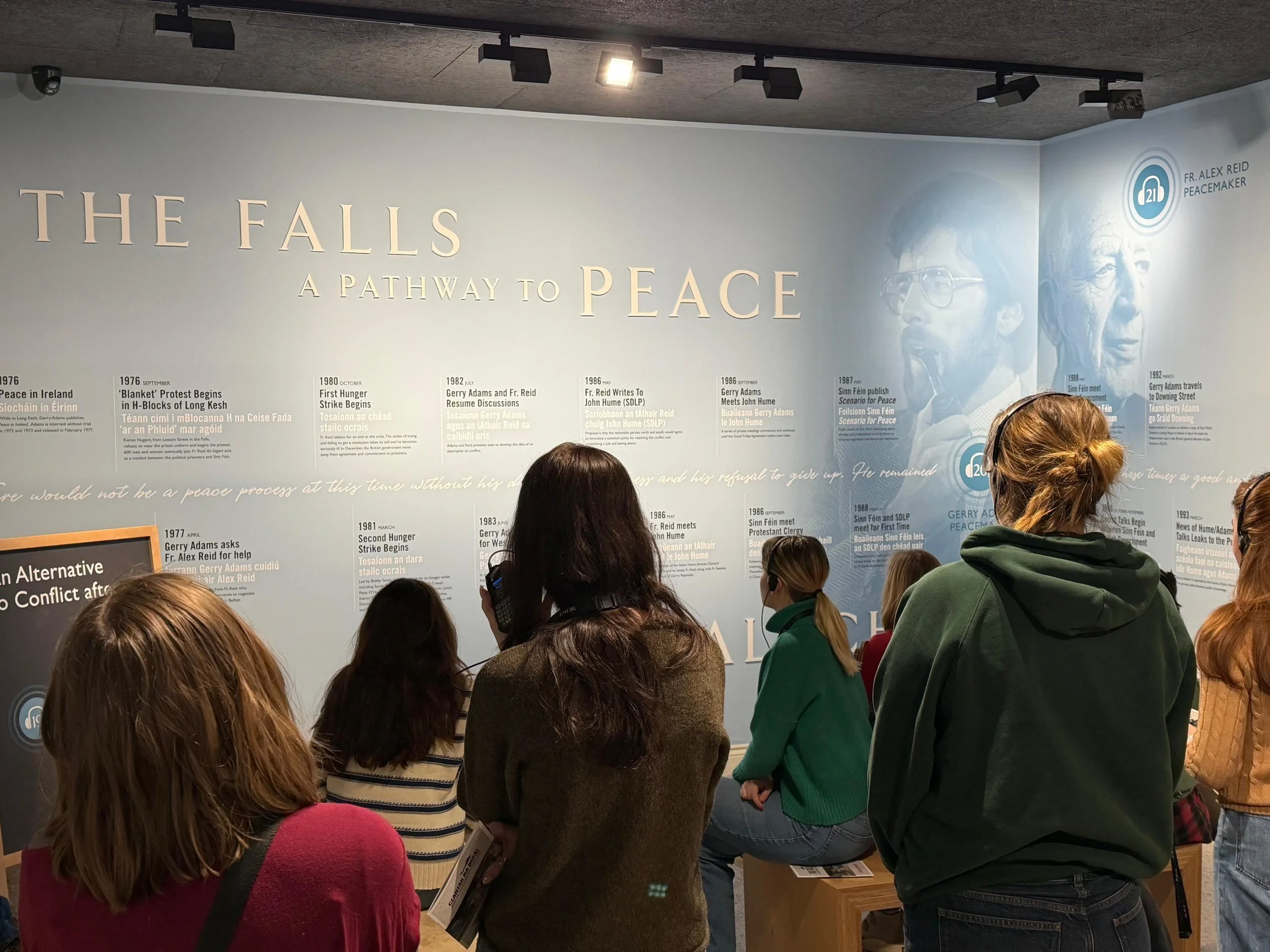
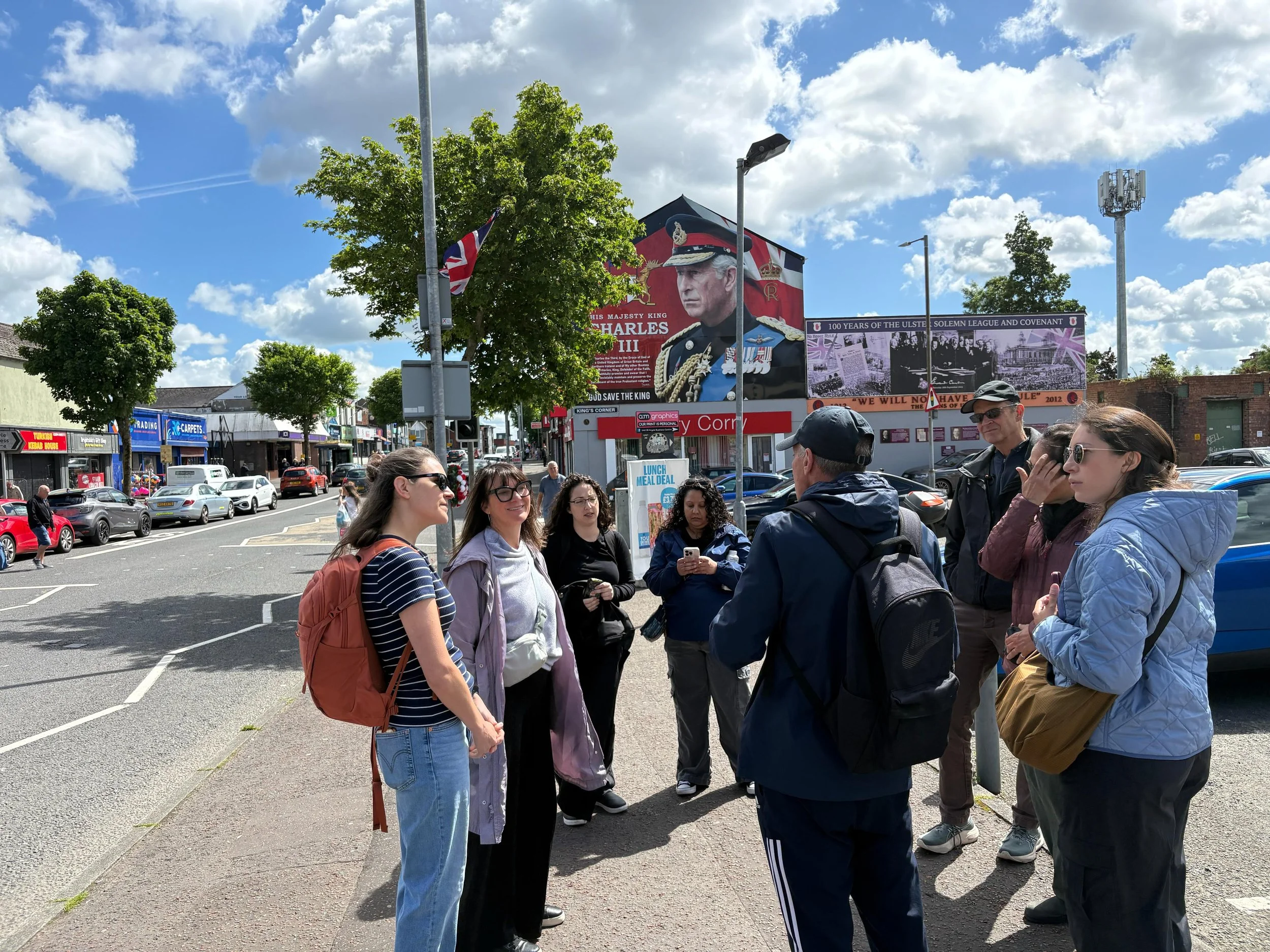
Based primarily in Belfast, the program combines expert-led learning with experiential education throughout the city and surrounding communities. Participants meet directly with psychologists and other mental health practitioners, community organizations, peacebuilders, academics, and people whose work addresses the continuing legacies of conflict.
Rather than studying mental health and trauma solely in a classroom, participants encounter the places, communities, and institutions in which Northern Ireland’s experiences of conflict and healing continue to unfold. Site visits and facilitated discussions are paired with structured opportunities for professional reflection and connection to participants’ own practice.
Program Themes
Trauma Across Generations
Political violence does not end when violence subsides. Participants explore the ways trauma can be carried through families and communities and how practitioners understand and respond to its intergenerational effects.
Mental Health in a Divided Society
Segregation, identity, inequality, and contested histories continue to shape life in Northern Ireland. The program examines what it means to practice mental health care within this broader social context and how societal conditions can influence individual and community wellbeing.
Community-Based Healing
Healing takes place beyond the therapy room. Participants learn from organizations and practitioners using community-based approaches to address trauma, support mental health, strengthen resilience, and rebuild relationships.
Memory, Identity, and Narrative
How societies remember conflict - and how different communities understand the same history - can shape both individual wellbeing and collective recovery. Participants consider the role of memory and identity in mental health, trauma, healing, and reconciliation.
Mental Health and Peacebuilding
Mental health and peacebuilding are deeply interconnected in societies emerging from prolonged conflict. The program explores how psychological healing, social repair, relationship-building, and efforts toward a more peaceful shared society can reinforce one another.
What Participants Gain
Participants leave Northern Ireland with a deeper understanding of mental health and trauma in a divided society, and with new perspectives on how mental health practitioners can respond to the effects of violence, division, loss, inequality, and intergenerational trauma.
By learning directly from Northern Irish practitioners, communities, and peacebuilders, participants gain approaches, questions, and frameworks they can bring back to their own professional contexts. The program also creates space for practitioners to reflect together on their work, build relationships with colleagues, and consider the role mental health professionals can play not only in individual healing, but in strengthening communities affected by conflict and division.